
Holiday gatherings and family dinners almost always turn to real estate. One relative is convinced home prices are about to crash, another heard foreclosures are surging, and someone across the table brings up the word “recession.”
With so many conflicting headlines circulating online, it is easy to second-guess your next move. Here is what late-2026 housing data from the National Association of Realtors (NAR), ATTOM, Cotality, and the Federal Housing Finance Agency (FHFA) actually shows—both nationally and across Chicago.
| Common Housing Fear | What the Data Shows | Chicago & Illinois Reality |
|---|---|---|
| “Home prices are going to crash.” | Forecasters project +1.4% average national price growth in 2027. | Chicago’s median sale price sits near $400,000 (+5.2% YoY) due to tight inventory. |
| “Foreclosures are surging like 2008.” | Filings remain below pre-pandemic levels; only 2.1% of U.S. mortgages are underwater. | Illinois climbed 6 spots to #28 nationally in homeowner equity gains. |
| “A recession will tank home values.” | WSJ economists put recession odds at 24%; prices rose in 5 of the last 6 recessions. | Midwest markets historically hold steadier than overbuilt Sunbelt metros. |
1. “Are Home Prices Going to Crash?”
The short answer is no. According to our breakdown of 2027 housing market predictions, major forecasting organizations project national home prices to rise an average of 1.4% in 2027—slower than the rapid jumps of recent years, but still positive growth rather than a crash.
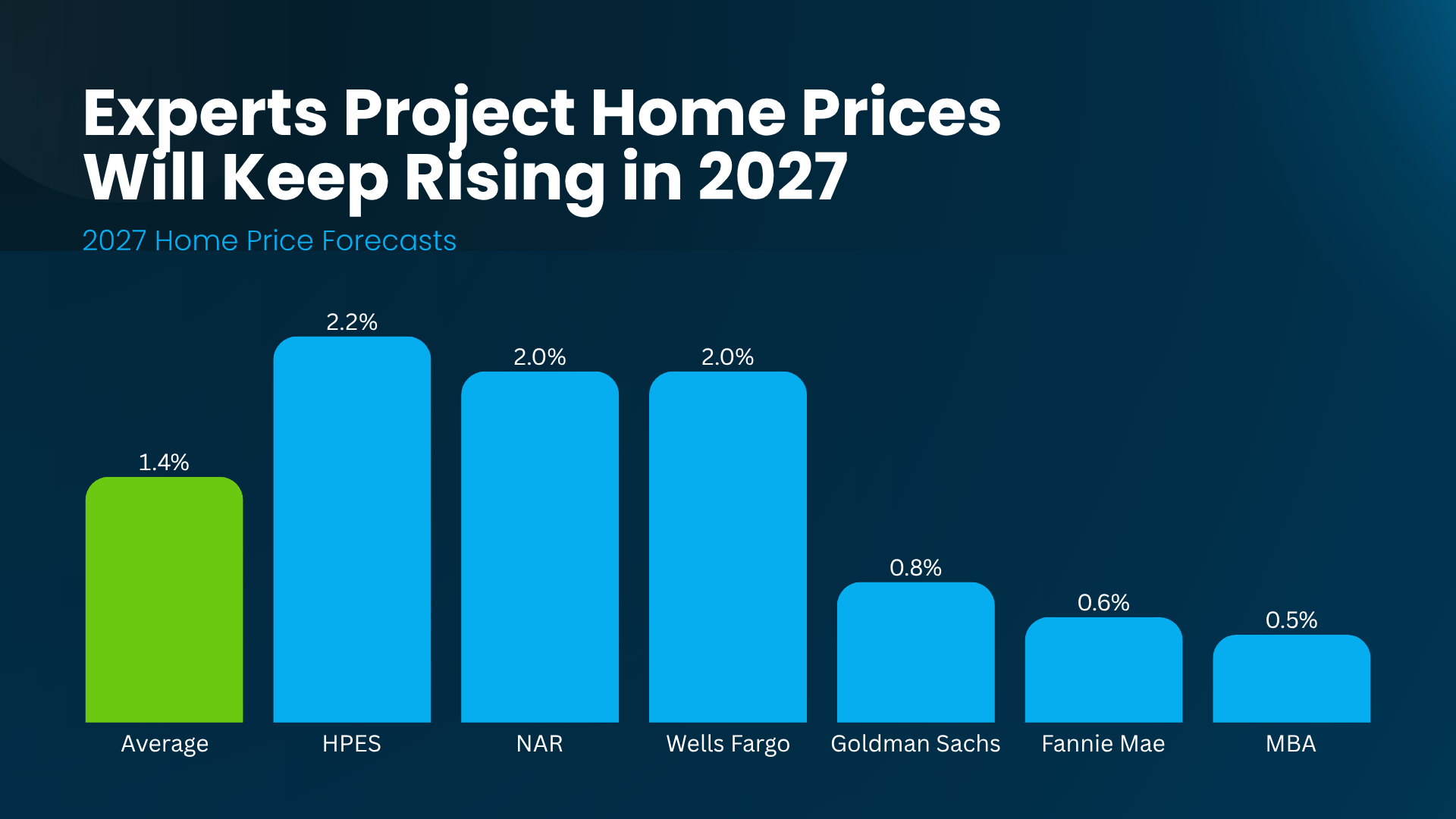
While localized price dips are making headlines on social media, they are concentrated in specific regions. Lawrence Yun, Chief Economist at the National Association of Realtors (NAR), explains why:
“Price declines are occurring mainly in southern states, where there has been robust new home construction in recent years. Given the region’s faster job growth, these price drops should be viewed as temporary and as a second-chance opportunity for those previously priced out of the market.”
What this means in Chicago: Unlike Sunbelt metros working through a surplus of new construction, Chicagoland remains supply-constrained. Redfin data shows the City of Chicago’s median sale price holding right near $400,000 (+5.2% year-over-year), underscoring why local supply and neighborhood comps matter far more than national headlines. For a deeper look at why national crash narratives miss the mark, read our full housing crash forecast breakdown.
2. “Is This 2008 All Over Again?”
Whenever headlines mention rising foreclosure filings, comparisons to 2008 quickly follow. While foreclosure activity has ticked up from historic pandemic-era lows, filings remain below pre-pandemic levels, according to ATTOM.
Logan Mohtashami, Lead Analyst at HousingWire, explains why today’s market is fundamentally different from 2008:
“. . . we have had many recessions post-WWII but only one foreclosure crisis. That foreclosure crisis started with a massive credit boom from 2002-2005, and then a credit bust. . . none of that is happening now . . .“
Today’s homeowners also hold a massive financial buffer that did not exist in 2008. According to Q2 2026 data from Cotality, the average U.S. homeowner with a mortgage holds roughly $310,000 in home equity (exceeding $100,000 in every state), and only 2.1% of U.S. mortgages are underwater. In Illinois, homeowner equity gains pushed the state up six spots to #28 nationally:

Because the vast majority of owners have substantial equity, homeowners facing financial hardship can sell their property on the open market rather than lose it to foreclosure. You can read more in our guide on how your home equity keeps you ahead.
3. “Are We Headed for a Recession?”
Even if someone at the table is convinced a recession is around the corner, most economists disagree. The Wall Street Journal’s survey of economists puts the average probability of a recession at roughly 24%.
More importantly, historical data from the Federal Housing Finance Agency (FHFA) shows that an economic downturn does not automatically pull home prices down. In 5 of the last 6 U.S. recessions, national home prices actually appreciated:
The sole exception was the 2008 Great Recession, which was triggered directly by subprime mortgage lending and a housing credit collapse—conditions that do not exist under today’s stricter underwriting standards.
Frequently Asked Questions About 2027 Housing Market Headlines
Will home prices drop in 2027?
Most housing economists forecast modest national price appreciation averaging around 1.4% in 2027 rather than a price drop. While select Sunbelt markets with high new-construction supply have seen temporary dips, supply-constrained Midwest markets like Chicago continue to show steady price growth.
Are foreclosures reaching 2008 crisis levels?
No. According to ATTOM and Cotality, foreclosure filings remain below pre-2020 norms and only 2.1% of mortgaged U.S. homes have negative equity, giving distressed homeowners the option to sell rather than enter foreclosure.
Do home prices always fall during a recession?
No. FHFA Home Price Index data shows national home values rose during 5 of the past 6 U.S. recessions, with 2008 being the only exception.
Plan Your 2027 Move With Real Local Numbers
The next time crash predictions or 2008 comparisons come up at dinner, remember what the data shows: national prices are projected to grow modestly, homeowner equity sits near record highs, and a recession does not automatically mean falling home values.
If you are weighing a move in 2027, start by reviewing our checklist on prepping your home to sell or checking local Chicago housing market trends.
Whether you are buying or selling in Chicago or the surrounding suburbs, Tammy Jackson and the team at KM Realty Group LLC can prepare a custom neighborhood market analysis so you can plan with real local numbers. Call us at (312) 283-0794 to get started.