
More homeowners are taking their homes off the market, and that has sparked plenty of questions about the housing market. If you’ve seen headlines suggesting this could be a warning sign, it’s understandable to wonder what it really means.
Fortunately, the latest housing data tells a much different story. Most sellers aren’t pulling their listings because the market is crashing. Instead, many are adjusting to changing market conditions, higher inventory levels, and longer selling times.
Understanding why sellers are stepping back can help you make more informed real estate decisions, whether you’re buying or selling.
Why More Sellers Are Taking Homes Off the Market
According to the latest data from Redfin, 5.5% of all listings were taken off the market in May. And it’s true that’s almost the highest it’s been since back in March 2020 (see graph below):
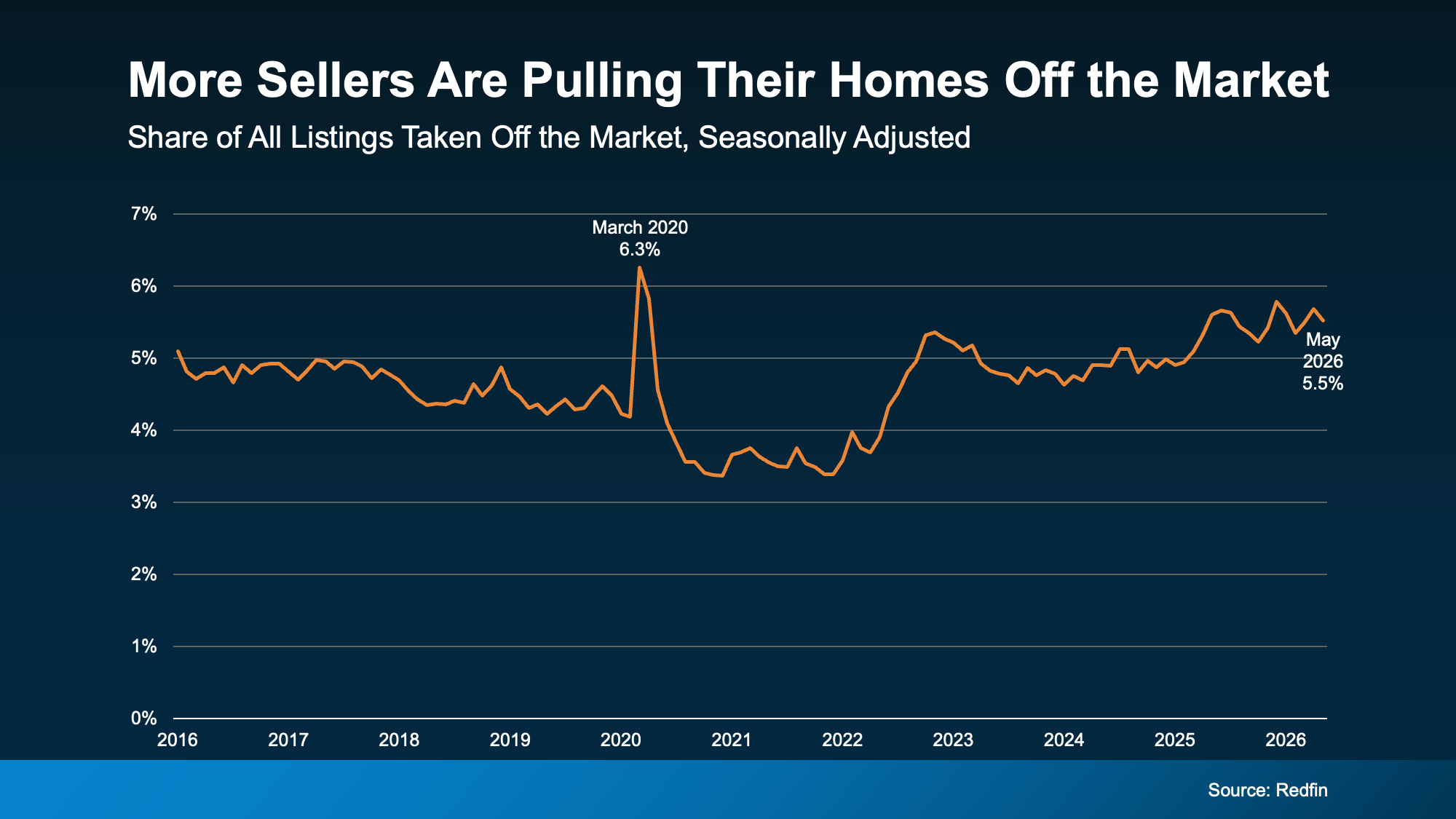
At first glance, that statistic may sound alarming. But the full story provides much more context. Much of the fear comes from how this story gets told.
“A near record number of sellers are pulling their listings” makes a great clickbait headline – and that sort of thing spreads fast, especially online. But sellers pull a house off the market for plenty of reasons that have nothing to do with a crash.
Many homeowners are adjusting their selling strategy as the market changes, not because they’re expecting prices to collapse. Understanding why home prices vary can help put today’s headlines into better perspective.
Redfin points to four main forces driving this trend:
- Homes are taking longer to sell. When the pace slows down, some sellers get frustrated and decide to hold off.
- The number of homes for sale is rising faster than demand. That means buyers have more options. And sellers who don’t price or prep right may not get many eyes on their house.
- Some sellers still have pandemic-era price expectations. A price that would’ve worked a few years ago may not match what today’s buyers are willing to pay.
- Economic uncertainty is making both buyers and sellers cautious. Buyers pause. Sellers second-guess. And that has an impact on overall sales volume and pace.
Notice what’s missing from that list? There isn’t a single mention of an impending market crash or price collapse.
Those factors point to a market that’s adjusting—not one that’s failing.
Instead, today’s market reflects changing buyer demand, growing inventory, and sellers adjusting their expectations—not a housing market crash.
Why This Doesn’t Mean the Housing Market Is Crashing
Want more peace of mind that this isn’t a crash? This next stat delivers. Yes, more sellers are taking their homes off the market. But Redfin also shows something you’re not going to see in social posts…
The number of re-listings is growing too.
While more sellers are pulling their listings, more are also deciding to give selling a second shot too. This is pretty much the highest re-listings have been since the pandemic hit.
While 5.5% got pulled in May, 2.3% were also put back on the market (see graph below):

That’s a signal sellers aren’t giving up or running away in large numbers.
Some are simply stepping away briefly before deciding to try again. That tells you this often isn’t a permanent decision. In many cases, it’s a pause – and the seller comes back with a different approach.
A lot of the time that change in the overall strategy is all that’s needed to finally get a house sold.
And just in case you need more proof this isn’t a reason to worry, check this out. Buyer activity may be starting to pick back up – and that could bring more sellers back in or, at least, prevent some sellers from pulling back.
The National Association of Realtors (NAR) reports existing home sales increased 3.2% in May. That’s the biggest increase since December. As the Wall Street Journal puts it:
“Home sales in May posted the biggest rise this year, a sign that the housing market’s crucial spring selling season may be showing signs of life after a sluggish start.”
That doesn’t sound like a market in trouble.
What This Means for Home Sellers and Buyers
Housing markets naturally change over time, and today’s market is becoming more balanced rather than heading toward a crash. More sellers are adjusting their pricing, timing, or selling strategy as inventory grows and buyers gain more choices.
If you’re thinking about buying or selling, understanding what’s happening in your local market is more important than following national headlines.
Whether you’re planning a move in Chicago or another community, a knowledgeable local real estate professional can help you make confident decisions based on current market conditions.
Key Takeaways
- More sellers are temporarily taking their homes off the market, but it doesn’t signal a housing market crash.
- Longer selling times, rising inventory, and pricing expectations are driving this trend.
- Many homeowners later relist their properties with a different selling strategy.
- Existing home sales are beginning to improve, showing buyers are still active.
- Understanding your local housing market can help you make more confident buying or selling decisions.