
Home prices are changing across the country, but not every housing market is moving in the same direction. While some areas continue seeing steady price growth, others are experiencing flatter prices or modest declines.
The biggest reason behind these differences isn’t mortgage rates alone. It’s housing inventory. Understanding how inventory affects home prices can help buyers and sellers make more informed real estate decisions in today’s market.
Whether you’re buying or selling a home, understanding how inventory affects home prices can help you make better real estate decisions. If you’re planning a move in Chicago or another housing market, knowing what’s happening locally matters even more.
Why Housing Inventory Has the Biggest Impact on Home Prices
Here’s the simple version:
- When there are more homes for sale, buyers have options.
- More options means less competition.
- Less competition means sellers can’t push prices as high.
On the flip side, when inventory is tight, buyers are competing over a small pool of homes, and that pushes prices up.
That dynamic is playing out right now in a really visible way across the country.
Markets where inventory has climbed back to, or above, normal pre-pandemic levels are seeing prices flatten or fall slightly. Markets where inventory is still well below those 2019 benchmarks are still seeing prices rise.
As Lance Lambert, CEO of ResiClub, puts it:
“Home prices are still climbing a little year-over-year in many regions where active inventory remains well below pre-pandemic 2019 levels, such as pockets of the Northeast and Midwest.
In contrast, some pockets in states like Texas, Florida, and Colorado — where active inventory exceeds pre-pandemic 2019 levels by a solid clip — are seeing modest home price pullbacks or flat pricing.”
How Inventory Levels Affect Home Prices Across the Country
Take a look at where inventory stands today compared to 2019.
In most places (“the states in gray below”), inventory still falls short of where we were back then. And that’s exactly why prices are climbing, albeit moderately, in the vast majority of states.
But you’re probably more interested in where prices are falling a bit, since that’s what is making headlines. So, let’s prove out how much inventory affects prices in those spots.
According to Realtor.com, 15 states and Washington, D.C. are now back above pre-pandemic inventory levels, and some by a wide margin (see the orange in the map below):
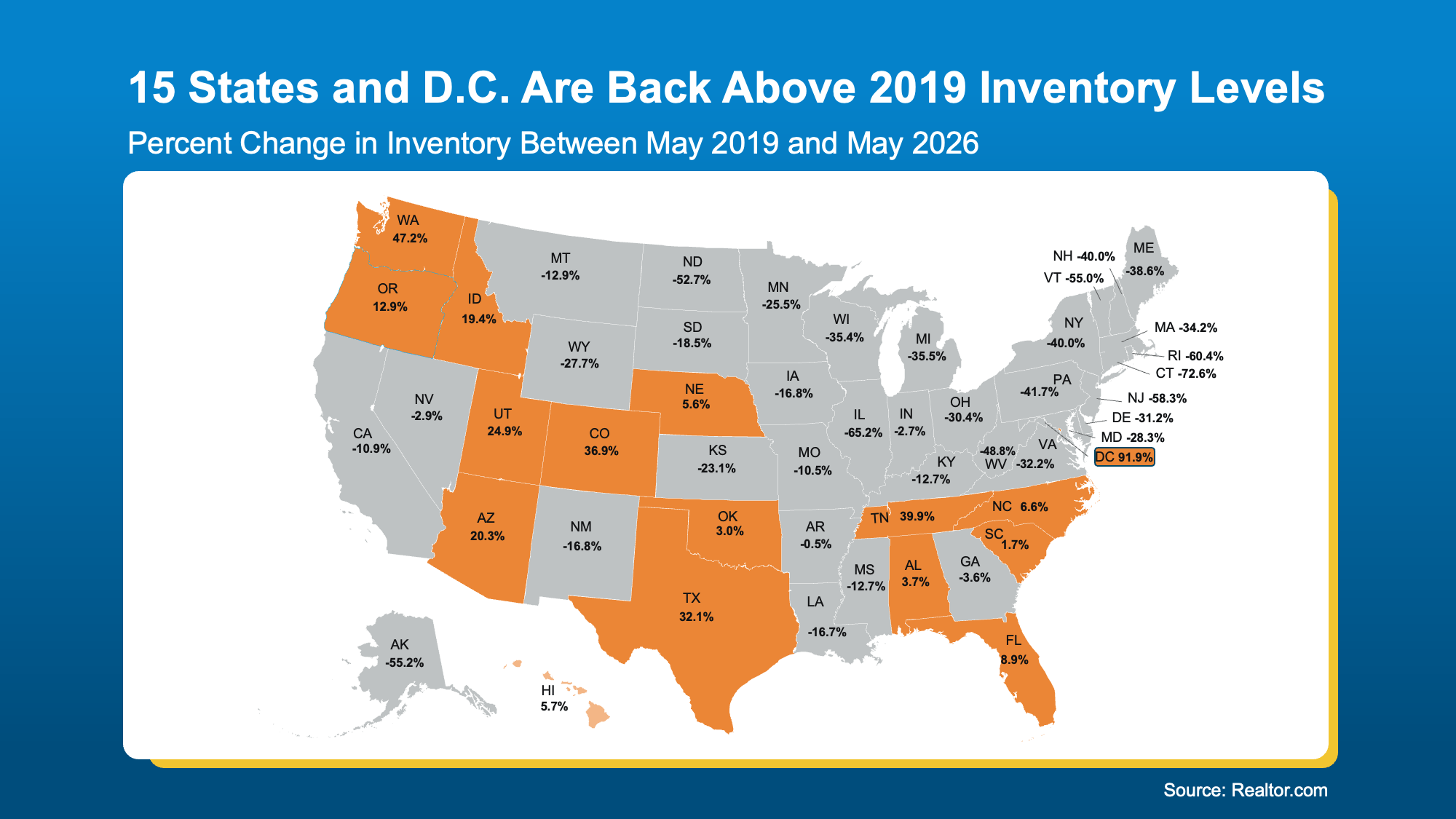 Now, let’s look at the latest Federal Housing Finance Agency (FHFA) data to see what’s happened to home prices in those same states over the past year (again, you’ll want to focus on the orange in the next map).
See how those line up pretty closely with the areas seeing more homes for sale today?
The overlap isn’t a coincidence. It’s cause and effect.
Chicago generally follows the same pattern. While some neighborhoods continue to have limited housing inventory and stronger price growth, others are seeing more listings and a more balanced market. That’s why understanding your local market is just as important as following national housing trends.

The national average of 1.7% price growth is accurate, but it’s an average of two very different stories happening at the same time – the few areas experiencing mild declines and the overwhelming majority that are still seeing prices rise.
What This Means for Buyers and Sellers
For Buyers
If you’re a buyer, the market you’re shopping in matters a lot right now. In places like Texas, Colorado, or Florida, you may have real negotiating power – more choices, less competition, and sellers who are more motivated to make a deal.
In tighter markets like much of the Northeast, you’re still likely facing a lot of competition.
For Sellers
If you’re a seller, pricing strategy is everything. In markets where inventory has risen, overpricing is one of the fastest ways to linger on the market and eventually sell for less than you would have with the right price from day one.
In markets where inventory is still low, you’re in a strong spot, but getting your price right still matters if you want to attract serious buyers quickly.
Either way, that’s where a local real estate agent earns their keep.
What This Means for Your Local Housing Market
National housing trends provide valuable insights, but every local market is different. Home prices can vary significantly from one city or neighborhood to another based on inventory, buyer demand, and local market conditions.
Whether you’re buying your first house, preparing to sell, or simply wondering what today’s home prices mean for your neighborhood, working with a knowledgeable local real estate professional can help you make confident decisions.
While national housing trends provide helpful insights, your local market matters most. Whether you’re buying or selling in Chicago or another community, understanding local conditions can help you make more confident real estate decisions.
Key Takeaways
- Housing inventory is one of the biggest factors affecting home prices today.
- Markets with more homes for sale often experience slower price growth.
- Areas with limited inventory continue seeing stronger home price appreciation.
- National housing trends don’t always reflect local market conditions.
- Working with a local real estate professional helps buyers and sellers make informed decisions.