
If you’re wondering where the housing market is headed for the rest of 2026, you’re not alone.
Mortgage rates remain elevated, affordability is still challenging, and many buyers and sellers are wondering whether now is the right time to make a move.
The truth is a lot changed during the first half of the year.
Experts began 2026 expecting lower mortgage rates, stronger home sales, and improved affordability. Instead, persistent inflation and economic uncertainty caused many forecasts to be revised.
Even so, today’s housing market remains much stronger than many headlines suggest.
Here’s what changed—and what it means for buyers and sellers going forward.
Back at the end of 2025, economists expected mortgage rates to come down, affordability to improve, and home sales to rebound. But lingering inflation, economic uncertainty, and growing geopolitical tensions pushed mortgage rates higher than expected. As a result, many buyers continued to wait on the sidelines.
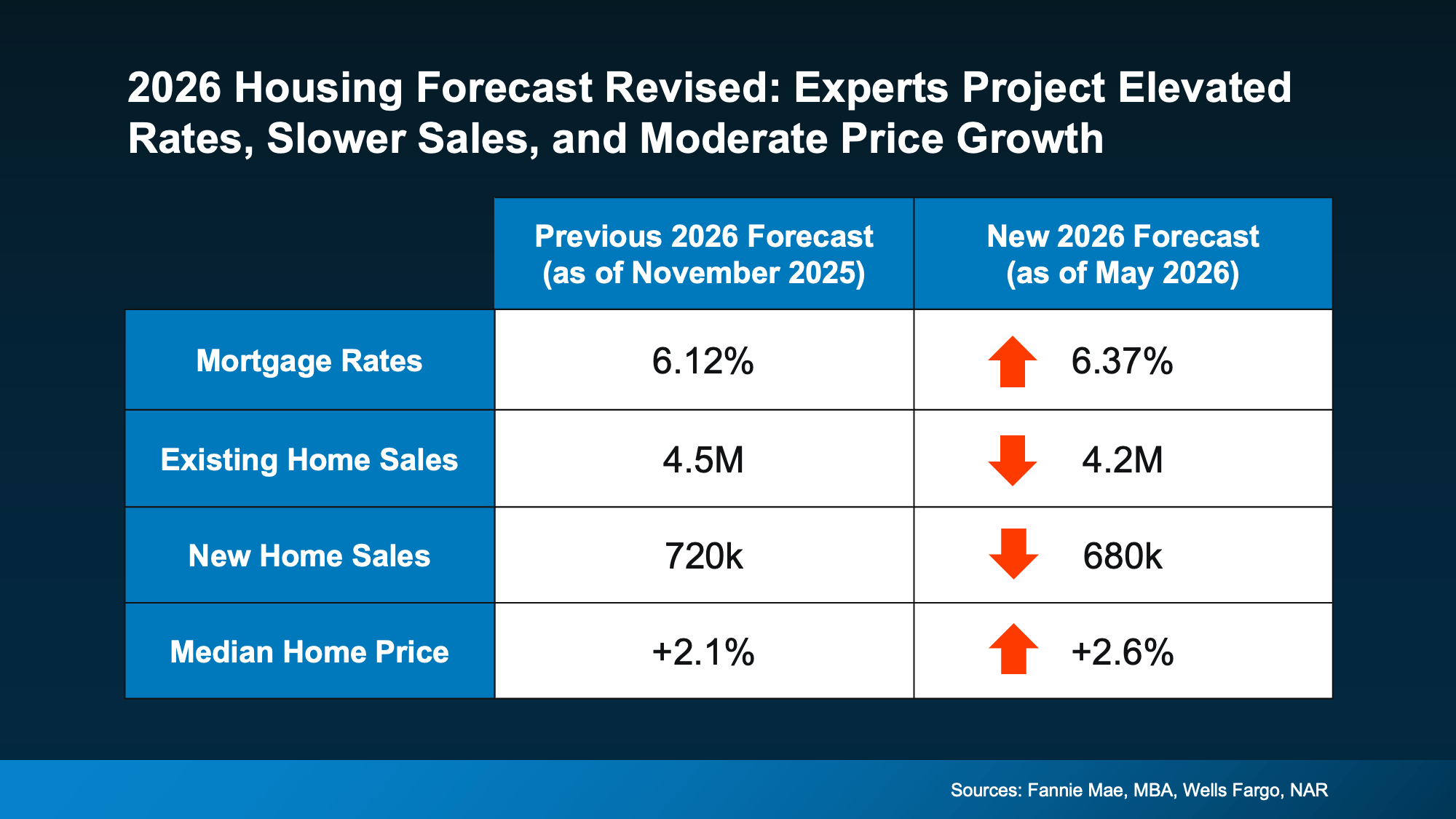
That’s why experts recently revised their housing forecasts for the rest of the year (see graph below):
So, what does this actually mean for you? Let’s break it down.
Mortgage Rates May Remain Elevated
While just about everyone wants mortgage rates to return to the upper 5% range or low 6% range we saw earlier this year, experts don’t think that’s likely to happen in 2026.
Instead, forecasts have been updated from the low 6% range originally projected. Many industry organizations now expect rates to remain in the mid-6% range for much of the year. The good news is that’s still lower than rates were a year ago.
Of course, forecasts can change as economic conditions evolve. If inflation eases faster than expected or global uncertainty improves, mortgage rates could move lower.
Existing Home Sales Revised Lower
Back in late 2025, experts expected we’d sell an average of 4.5 million existing homes this year. Today, that forecast has been revised to about 4.2 million.
That tells us something important: buyers are still hesitant because affordability remains challenging.
Higher mortgage rates have made monthly payments harder to manage, especially for first-time buyers. Even so, experts still expect more homes to sell this year than last year.
“There is sizable pent-up demand that could be released into the market.”
There are already signs that buyer activity is beginning to improve. Pending home sales have increased month-over-month despite higher mortgage rates.
If you can comfortably afford a home today, it may still make sense to buy now. Waiting could mean facing more competition once rates begin to improve.
New Home Sales Also Slowed
Builders also expected a stronger year. Earlier forecasts projected more than 700,000 new home sales in 2026. Those expectations have since been revised slightly lower.
Again, mortgage rates remain the biggest reason.
For buyers, however, this could create opportunities. Builders may continue offering incentives, pricing flexibility, and negotiation opportunities to attract buyers.
If you’re considering new construction, this may be one of the best areas of today’s housing market.
Home Prices Are Still Expected To Rise
This is one of the biggest takeaways from the updated forecast. Even though home sales have slowed, experts have not significantly lowered their national home price forecast.
They still expect home prices to rise nationally this year.
Why? Because while buyer demand has softened, the supply of homes for sale remains below long-term norms in many markets.
Nationally, experts continue to project steady home price appreciation rather than a major decline. Strong homeowner equity, relatively limited inventory, and historically low foreclosure activity continue supporting home values.
That should provide reassurance whether you’re buying or selling. Sellers benefit from stable home values, while buyers can purchase knowing experts aren’t expecting a significant nationwide decline.
The reason prices continue to hold up becomes even clearer when you look at the financial strength of today’s homeowners.
Why the Housing Market Is Stronger Than Many People Think
If you’ve been following recent headlines, it’s easy to assume the housing market is struggling. But today’s market is very different from the housing crash of 2008.
One of the biggest reasons is the financial strength of today’s homeowners.
According to Federal Reserve data, homeowners across the U.S. now hold roughly $35 trillion in home equity. That is significantly higher than the total amount of outstanding mortgage debt.

Unlike 2008, most homeowners aren’t overleveraged. Many have built substantial equity over the past several years, giving them greater financial flexibility if they decide to sell. It also means fewer homeowners are under financial pressure to sell at discounted prices.
Research from Realtor.com shows homeowners who have owned their homes for five years have accumulated about $180,000 in equity on average. Those who have owned their homes for six to ten years have built more than $340,000 in equity on average.
That level of homeowner equity continues to provide stability throughout today’s housing market.
Why Experts Aren’t Expecting a Housing Crash
Strong homeowner equity is one of the biggest reasons experts continue to expect home prices to remain relatively stable.
Most homeowners aren’t being forced to sell because they have meaningful equity and manageable mortgage payments. In fact, many homeowners continue to benefit from mortgage rates below 4%, making it less likely they’ll list their homes unless they truly need to move.
Foreclosure activity also remains well below historical levels, showing today’s market is supported by stronger homeowner finances rather than risky lending practices.
While local market conditions will always vary, today’s data points to a gradual market correction rather than the widespread housing crash many people fear.
What This Means for Buyers and Sellers in 2026
While housing market forecasts have been adjusted, the bigger picture remains the same: people continue buying homes, selling homes, and moving because of changing life circumstances. Understanding mortgage rates, inventory levels, and buyer demand can help you make better real estate decisions.
Whether you’re buying your first home, planning to sell, or simply waiting for the right opportunity, understanding your local market can make all the difference. Every neighborhood is different, and national trends don’t always reflect what’s happening where you live.
If you want to know what’s happening in our local housing market, and what it could mean for your plans for the rest of 2026, let’s connect.
Key Takeaways
- Housing market forecasts changed during the first half of 2026, but experts still expect activity to improve over last year.
- Mortgage rates may remain higher than originally expected, though buyers are gradually adjusting.
- Home prices are still expected to rise nationally rather than decline.
- Strong homeowner equity and historically low foreclosure levels continue to support market stability.
- Many homeowners have built substantial equity, giving them more flexibility when buying or selling.
- Understanding your local housing market is the best way to make informed real estate decisions.