
A lot can feel uncertain right now, and that hesitation can make it tempting to delay your real estate plans.
If you are worried about a housing crash, recent national data tells a much calmer story than social media headlines suggest.
A survey from Talker Research asked Americans to pick one word describing this year so far. The top response was stressful. With inflation and economic shifts in the news, caution is natural.
However, the real estate market is quietly settling into predictable patterns across home prices, inventory levels, and financing costs. Here is what the numbers actually show.
Are We Heading Toward a Housing Crash?
Current economic indicators do not point to a housing crash.
Data from the National Association of Realtors and Freddie Mac shows home prices leveling into modest appreciation, inventory stabilizing near balanced levels, and mortgage rates maintaining a defined range rather than spiking.
Home Prices Have Leveled Out
After several years of intense price acceleration, data from the National Association of Realtors (NAR) confirms prices have returned to steady, sustainable growth.
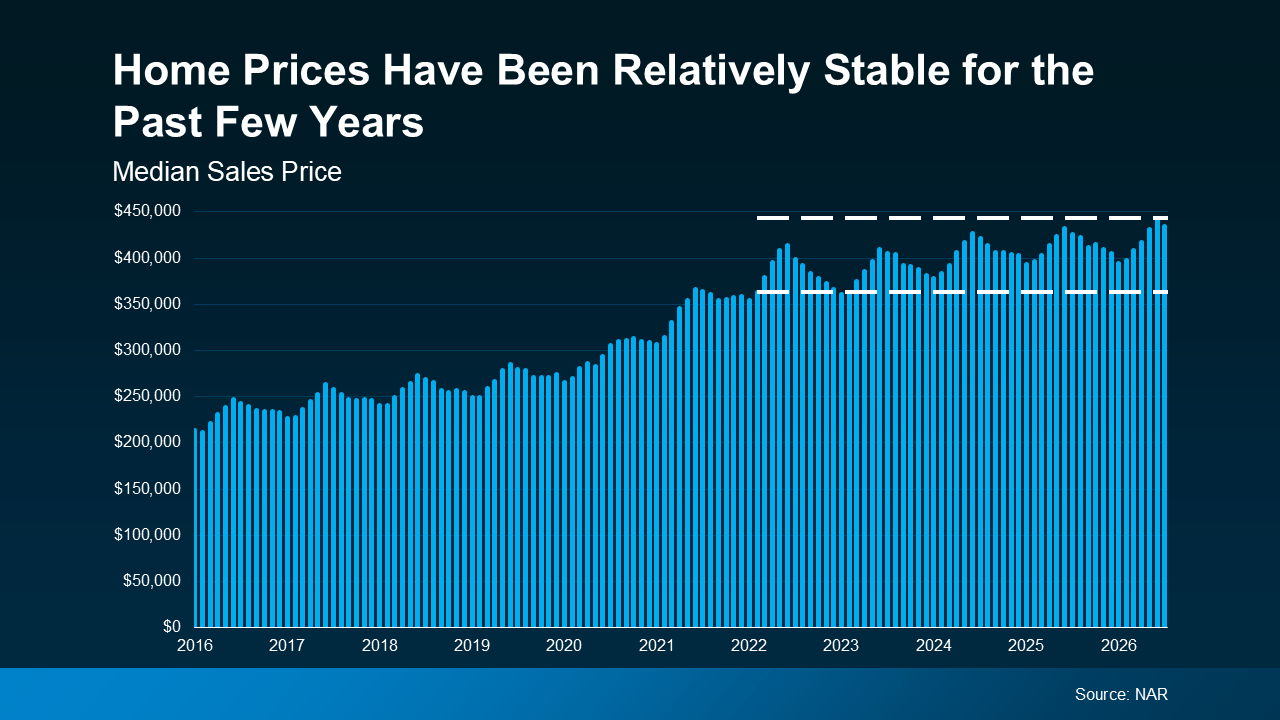
Real estate values do not climb at identical speeds everywhere. Some markets experience slower appreciation while others see modest adjustments.
Nationally, property values reflect modest long-term growth rather than sudden drops. Institutional economists expect this stability to continue, giving buyers and sellers a predictable foundation to make decisions.
The Supply of Homes for Sale Has Steadied
Housing inventory has evolved significantly over the last few years. Active listings dropped dramatically before gradually rebounding as more owners listed their homes.
According to research from Realtor.com, overall supply has leveled out near previous-year benchmarks.

For buyers, steady supply means more breathing room to evaluate homes without frantic bidding wars. For sellers, it clarifies local competition so you can price strategically.
Understanding active housing inventory trends helps separate temporary seasonal shifts from actual market turns.
Mortgage Rates Have Found a Defined Range
Financing costs experienced sharp adjustments following historic pandemic lows. However, rates have spent recent quarters fluctuating within a consistent band.
Weekly market data from Freddie Mac confirms rates have largely stayed within the 6% to 7% range.
While everyone prefers lower borrowing costs, predictability provides immense value. Buyers can calculate dependable monthly budgets, and sellers know their prospective buyers can secure financing.
For deeper insight into lending movements, review our guide on why mortgage rates are expected to ease over time.
Why Today Differs Entirely from the 2008 Crash
Sensational headlines frequently draw comparisons to the mid-2000s, but today’s underlying fundamentals are fundamentally different:
- Unprecedented Equity: Homeowners today possess substantial home equity, preventing the wave of distressed sales seen in 2008.
- Strict Lending Standards: Modern mortgage qualification requires verified income and solid credit profiles.
- Controlled Supply: Even with recent inventory gains, markets do not face the massive overbuilding that preceded the previous collapse.
To see how economists analyze these structural differences, read our breakdown of why this market is not like 2008.
National Data vs. Local Reality
National statistics provide broad economic context, but all real estate decisions remain local.
For example, economic factors in the 2026 Chicago housing market forecast—such as localized neighborhood demand, school districts, and Cook County property taxes—create distinct conditions you will not see in national averages.
If you own property, discovering what your home is worth today provides much clearer guidance than country-wide headlines.
If you plan to buy, browsing verified local homes for sale shows your actual options on the ground.
Key Takeaways for Buyers and Sellers
- Home price growth has moderated into stable, historical patterns rather than sharp declines.
- Inventory has leveled out, creating a more balanced transaction environment.
- Mortgage rates have found a predictable operating range.
- Strict underwriting and accumulated homeowner equity safeguard against systemic foreclosures.
Plan Your Next Step in the Chicago Market
A healthy real estate market does not require record-breaking price spikes. Predictability creates the best conditions to purchase or sell without second-guessing.
Whether you are planning a purchase, preparing to list, or simply evaluating your equity across Greater Chicago, our team provides clear guidance backed by verified numbers.
Ready to discuss your real estate goals? Reach out to our local advisory team today or call our Chicago brokerage office directly at (312) 283-0794 to get started.