
If you are following the latest housing crash forecast headlines, public opinion seems split right now.
One group of buyers hesitates out of fear that home values might collapse. Meanwhile, a recent survey from Clever found nearly 58% of Gen Z buyers actually hope for a drop to make homeownership affordable.
Smart buyers and sellers base their real estate decisions on reliable data rather than online speculation.
Every quarter, Fannie Mae surveys over 100 housing economists and market strategists for their Home Price Expectations Survey. Here is what their newest numbers reveal about the market outlook.
Is an Actual Housing Crash Forecast by Experts?
Fannie Mae’s survey of over 100 housing economists does not forecast a housing crash. The expert panel projects cumulative home price growth of 14.7% through 2030, with even the most conservative analysts anticipating steady 6.6% growth nationwide.
Simply put: the institutional analysts studying inventory and mortgage data do not see a crash on the horizon.
Key Findings from the 5-Year Housing Market Forecast
The panel includes leading economists and financial researchers. Their consensus data points to three clear conclusions regarding this housing crash forecast:
- Continuous Annual Growth: Economists expect home prices to rise each year through at least 2030.
- 5-Year Average: The nationwide consensus indicates an average price increase of 14.7%.
- Conservative Baseline: Even the most bearish analysts surveyed anticipate prices will climb roughly 6.6% by late 2030.
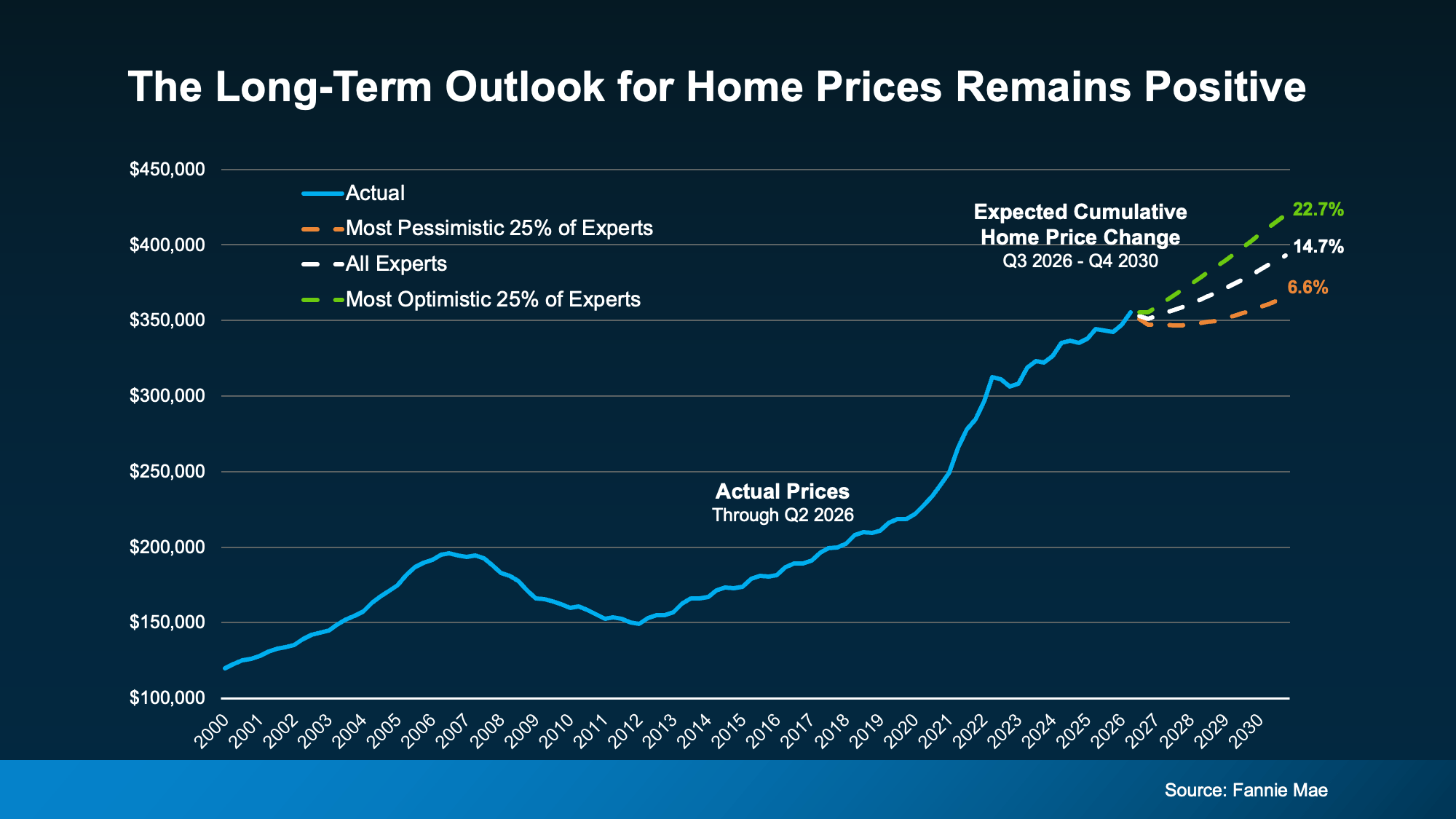
Waiting for prices to drop significantly often means waiting a very long time—and likely paying a higher purchase price down the road.
Near-Term vs. Long-Term Housing Crash Forecast Adjustments
Because Fannie Mae updates this survey quarterly, we can track how economist sentiment evolves over time.
A year ago, the panel anticipated 2.1% price growth for this year. Today, analysts raised that forecast to 2.5%, reflecting resilient buyer demand.

Projections for 2027 through 2029 reflect slightly slower, more normalized appreciation, matching broader financing trends published by Freddie Mac.
A calmer growth pace does not signal a crash. Instead, it indicates a market returning to balance after years of sharp volatility.
What This Housing Crash Forecast Means for Your Equity
Percentages matter, but actual dollars tell the real story for household wealth.
Based on the 14.7% five-year projection, a $400,000 home purchased today gains roughly $58,000 in equity strictly from market appreciation.
Homeowners build this equity simply by living in the property, completely separate from monthly principal reduction.
Macroeconomic Data vs. Local Market Trends
National reports offer helpful economic context, but buyers and sellers must evaluate local realities rather than relying solely on a nationwide housing crash forecast.
Broad surveys cannot capture neighborhood inventory shortages, local school district appeal, or regional property tax adjustments. These hyper-local dynamics determine whether values in your community rise faster or slower than national averages.
If you currently own a property, discovering what your home is worth in today’s active market provides far more insight than broad national headlines.
For buyers entering the market, reviewing current homes for sale shows what local inventory and pricing look like right now.
Frequently Asked Questions About the Housing Crash Forecast
Will home prices drop significantly over the next few years?
Major institutional forecasters evaluating the latest housing crash forecast data do not anticipate widespread price drops. While price growth has moderated from previous peak years, tight inventory and ongoing buyer demand continue to support home values nationwide.
Is it better to buy now or wait for a price crash?
Waiting for a crash that economists do not foresee risks paying higher purchase prices later. With five-year projections averaging 14.7% cumulative gains, delaying a move can lead to missed equity accumulation.
Get Local Clarity with KM Realty Group LLC
Macroeconomic surveys outline the national landscape, but real estate success comes down to your micro-market and your timing.
Whether you plan to buy, sell, or simply review market conditions across the Greater Chicago area, our team provides straightforward guidance backed by real local data.
Contact KM Realty Group LLC today or call our Chicago office directly at (312) 283-0794 to connect with an experienced local agent.