
If you’re following the housing market, you may have heard the term “silver tsunami.” It describes a major generational shift as older Americans leave homes they have owned for years.
That may sound like millions of homes will suddenly hit the market. But the research points to a gradual transition over the next decade, not a sudden flood of listings.
If you’re planning to sell, this trend is worth understanding. But it is not a reason to put your plans on hold. Your local housing market, your home’s condition, and your pricing strategy matter much more when deciding when and how to sell.
What the Silver Tsunami Really Means
According to Realtor.com research, about 13.9 million homes owned by Baby Boomers and members of the Silent Generation are projected to leave owner occupancy between 2026 and 2036.
That number needs some context. These homes may become available because an owner passes away, moves into care, combines households, or moves into a rental. **It does not mean all 13.9 million homes will be listed for sale.**
The research estimates an average of about 1.39 million homes released from owner occupancy each year. The projected number rises from roughly 1.27 million in 2027 to 1.52 million in 2036.
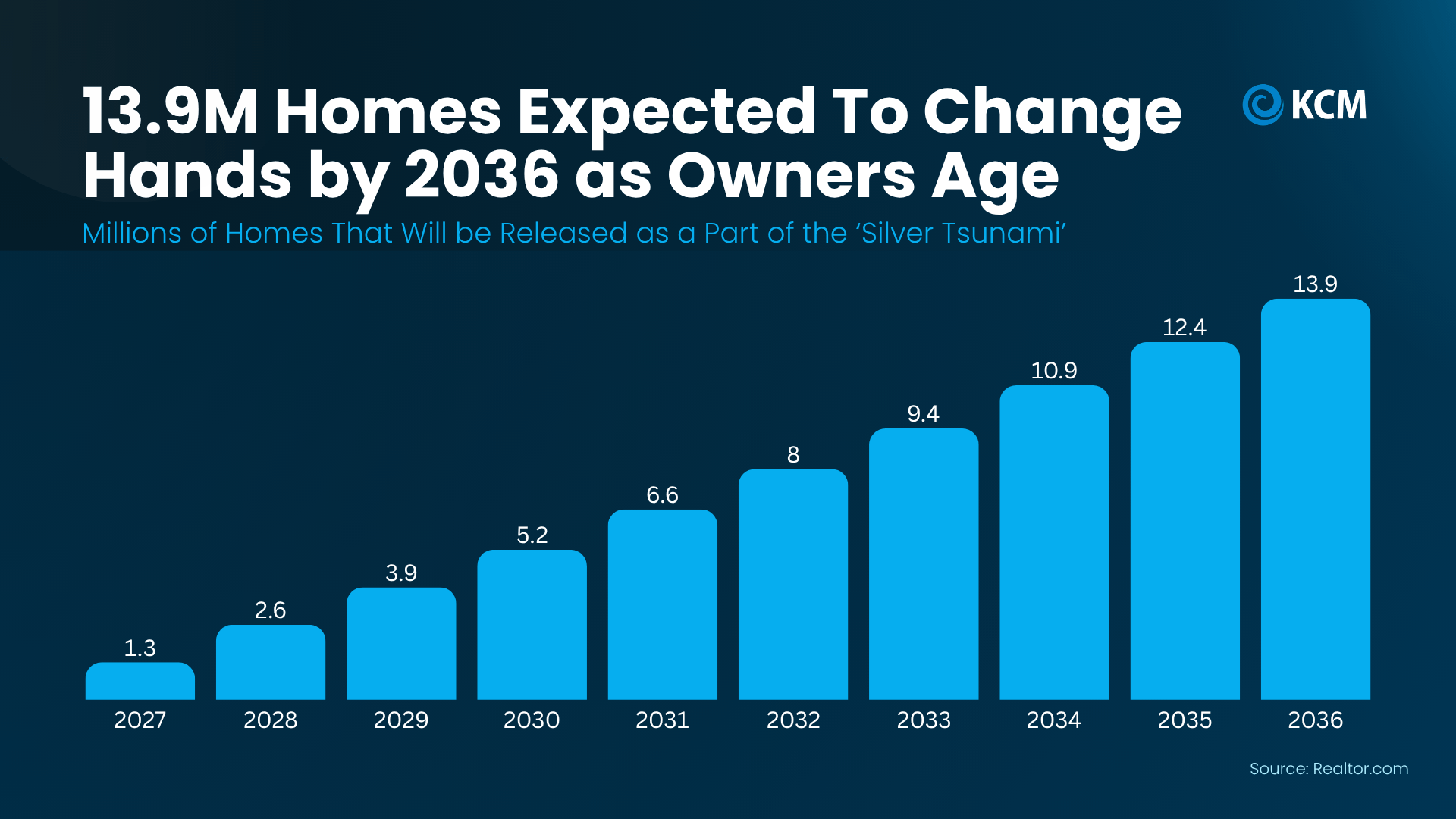
This is a gradual change in housing supply. It is not an overnight wave of new listings.
What Types of Homes Could Become Available?
The number of homes is only part of the story. The type of homes matters, too.
Realtor.com estimates that about 9.9 million of the projected homes will have three or four bedrooms. These are generally family-sized homes. By comparison, about 380,000 are expected to be starter homes with two bedrooms or fewer.
That difference matters because more family-sized homes do not necessarily solve the shortage of smaller, lower-priced homes.
The impact will also depend on location. A national projection cannot tell us how many homes will become available in a particular Chicago neighborhood or suburb. Local supply, property types, and buyer demand will shape what happens in each market.
Why More Homes May Not Overwhelm the Market
The U.S. housing supply has faced years of construction challenges. After the 2008 housing crash, homebuilding slowed. The pace of construction and the growth of the housing stock did not follow the historical path used in some estimates.
A 2026 report from the White House Council of Economic Advisers describes what the housing stock might look like if single-family homebuilding had continued at its historical pace after 2008. Under that hypothetical comparison, there could have been 10 million or more additional single-family homes.
You can read the discussion in the 2026 Economic Report of the President.
It is important to understand what this number means. It is a comparison with a hypothetical construction path. It is not a direct count of homes currently missing from the market.
As older homeowners leave their properties, some homes may add to the available supply. At the same time, households will continue to need places to live.
The result is not guaranteed to be the same everywhere. New construction, household growth, affordability, and local buyer demand will all influence how additional homes affect a market.
What Sellers Should Focus on Instead
If you’re thinking about selling, the silver tsunami is not a reason to automatically delay your move.
A national projection covering the next decade cannot tell you how many homes are competing with yours today. It also cannot tell you what buyers in your neighborhood are willing to pay.
Those decisions depend on your local market. Before choosing a listing date or asking price, look at three things:
- Current competition. How many similar homes are available nearby? This helps you understand the choices buyers have and how your home compares.
- Recent comparable sales. What have similar homes actually sold for? Recent closed sales help you set a realistic asking price.
- What local buyers value. Condition, layout, location, and features can all affect how buyers respond to your home.
Preparation matters, too. Not every improvement will deliver the same value. Focus on the repairs and updates that make sense for your property and the buyers you hope to reach. Our guide to staging your house to sell can help you think through presentation before listing.
Pricing is another important decision. An asking price should reflect recent comparable sales and the competition buyers can see today. Learn more about pricing your house right before bringing it to market.
For homeowners considering a move in Chicago or the surrounding suburbs, local conditions matter more than a national projection. The number of competing listings and the pace of sales can vary by community, neighborhood, property type, and price range.
Questions About the Silver Tsunami
Will millions of older homeowners’ houses hit the market at once?
No. Realtor.com projects that about 13.9 million homes will leave older generations’ owner occupancy between 2026 and 2036. The change is expected to happen gradually, and not every home will become a traditional sale listing.
Does the silver tsunami mean home prices will fall?
Not necessarily. The effect on prices will depend on local housing supply, buyer demand, home condition, affordability, and other market factors. A national projection alone cannot predict what will happen to prices in a specific neighborhood.
Should I wait to sell because more homes may become available?
Not automatically. The right time to sell depends on your goals and current local market conditions. Review competing listings, recent comparable sales, and buyer demand before making a decision.
Make Your Selling Decision Based on Your Local Market
The silver tsunami is a real demographic trend, but it is expected to unfold over many years. The projected homes will not all become listings, and the impact will vary by home size and location.
If selling is part of your plans, focus on what you can evaluate now: local inventory, recent sales, buyer demand, and the right strategy for your property.
KM Realty Group LLC can help you understand the competition and prepare a selling plan based on your local market. Explore our home-selling services to learn how we can help you plan your next move.
