
One headline says home prices are falling. Another says they are still rising. So, which one is right?
The answer depends on what the data measures, when it was collected, and where you live. Asking prices can move differently from actual sale prices. National trends can also hide major differences between local housing markets.
If you’re buying or selling a home in Chicago, understanding these differences can help you make decisions based on local evidence instead of headlines.
In this article:
What Do Falling Asking Prices Really Mean?
When you see headlines about falling home prices, start by checking what the numbers actually measure.
Some reports track asking prices. These are the prices sellers advertise when listing their homes. Other reports track completed sales or use home price indexes to measure changes in property values.
These measures can move in different directions because they track different parts of the market. Sellers may lower their asking prices to attract buyers, even while a home price index shows values rising over the same period.
Seasonal patterns can also affect housing activity. Listing activity, buyer demand, and prices can change throughout the year. However, a seasonal slowdown alone does not explain every price decline.
For example, Realtor.com’s September 2026 housing report recorded a national median listing price of $419,250, down 1.4% from September 2025.
This figure reflects asking prices, not the final prices buyers paid for homes. It should not be treated as proof that every home’s market value is falling.
Before making a decision based on a headline, check the source, reporting period, location, and type of price being measured.
Where You Live Changes Everything
National statistics provide useful context, but local housing markets can perform very differently.
The August 2026 S&P Cotality Case-Shiller Home Price Index report, released on October 27, showed a clear difference between Chicago and Seattle.
- Chicago: Home prices increased 6.7% year over year.
- Seattle: Home prices decreased 2.0% year over year.
- Nationally: The Case-Shiller national index increased 2.1% year over year.
The difference between Chicago and Seattle was 8.7 percentage points. These figures show why a national headline cannot explain what is happening in every local market.
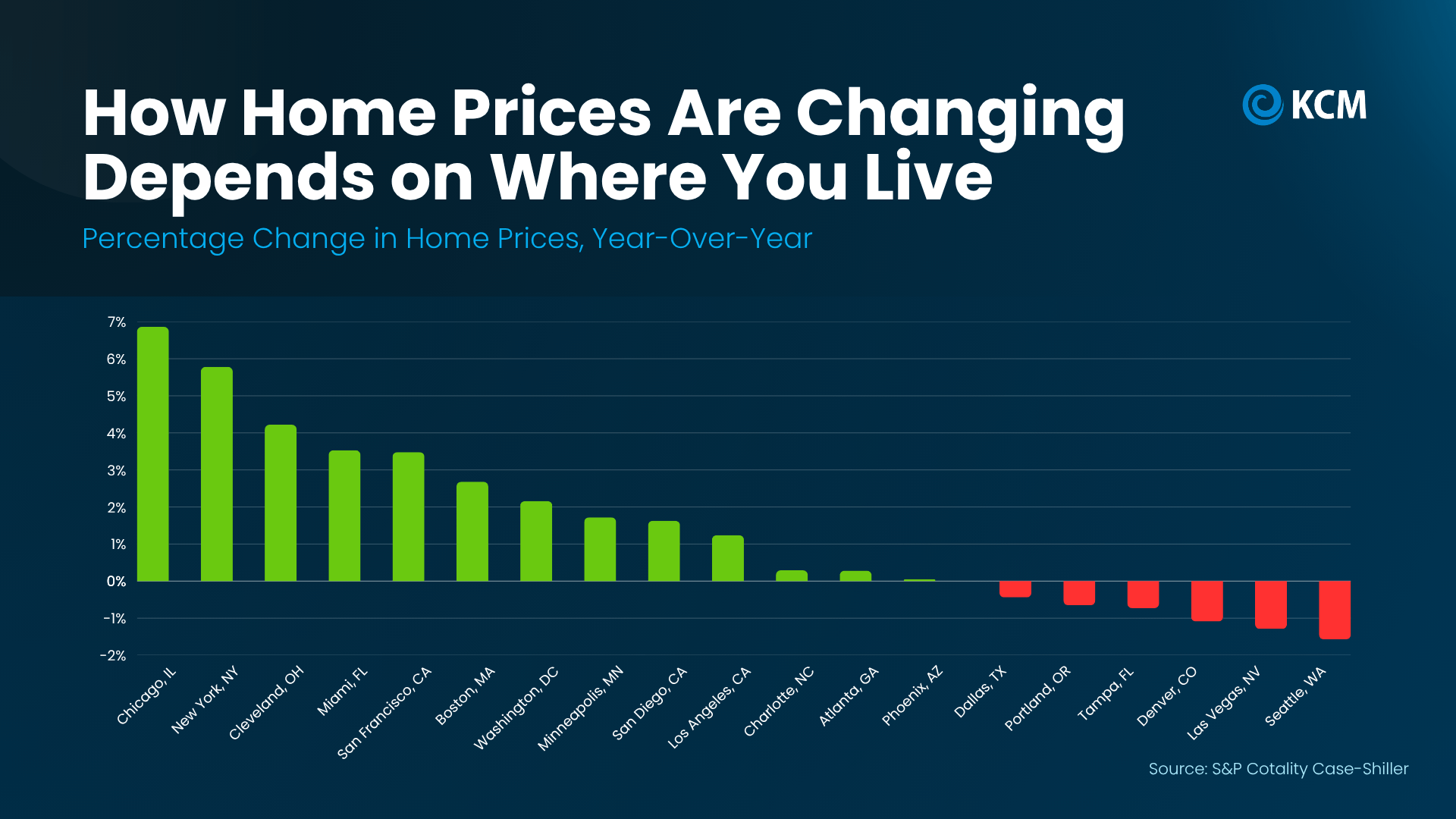
These figures measure annual changes in a home price index. They do not represent the asking price of every home currently listed for sale. Individual properties can perform differently based on location, condition, features, and pricing.
Another report illustrates why the source matters. The Federal Housing Finance Agency’s August 2026 House Price Index report reported national home price growth of 2.4% year over year. That differs from the Case-Shiller figure because the indexes use different data and methodologies.
For Chicago homeowners, the lesson is simple: look beyond national averages. Conditions can vary by neighborhood, property type, and price range.
Explore our guide to how different housing market conditions affect buyers and sellers to learn why markets can behave differently even during the same period.
Does This Mean a Housing Crash Is Coming?
Price declines in some markets can create concern, but a short-term decline alone does not prove that a housing crash is coming.
To understand the bigger picture, look at several measures together. These include home prices, available inventory, buyer demand, mortgage costs, and the financial condition of homeowners.
The Federal Housing Finance Agency reported that national home prices increased 2.1% year over year in the second quarter of 2026. Its report also noted that national home prices had recorded positive annual appreciation in every quarter since the beginning of 2012.
You can review the figures in the FHFA’s second-quarter 2026 housing price report.

Historical growth does not guarantee that prices will keep rising. Some local markets may experience declines, and individual homes may lose value.
It is equally important not to assume that every market is heading toward a crash simply because prices have softened in certain areas. The available evidence needs to be considered in context, including the period covered and the measures being compared.
The best approach is to evaluate current evidence rather than relying on dramatic headlines or confident predictions alone.
What This Means for Chicago Buyers and Sellers
Understanding local conditions can help you make a more informed decision about buying or selling a home. National trends offer context, but your strategy should reflect the property and market you are considering.
If you’re thinking about selling
National headlines should not determine your asking price. Start by looking at recent sales of comparable homes in your neighborhood.
Consider these questions:
- What have similar homes recently sold for?
- How long are comparable properties taking to sell?
- Are sellers reducing prices in your neighborhood?
- Does your asking price reflect your home’s condition and features?
- How much competition will buyers see when comparing your property with other listings?
These answers can help you develop a realistic pricing strategy. A home priced appropriately for its local market may attract interest even when national headlines sound discouraging.
If you’re thinking about buying
Don’t assume that national price declines mean every home is becoming more affordable.
Compare similar properties, research local sales, and consider the full cost of ownership. Mortgage rates, property taxes, insurance, and association fees can all affect your monthly budget.
In some situations, buyers may have more room to negotiate. In others, desirable homes may still attract strong competition.
Your strategy should reflect the specific property, your financial position, and local market conditions rather than a national average.
How to Read Home Price Headlines More Carefully
Before reacting to a housing market story, use this simple checklist.
- Check the date. Housing reports often describe data from an earlier month or quarter.
- Identify the measure. Asking prices, completed sale prices, and home price indexes are not interchangeable.
- Look at the location. National averages can hide major differences between cities and neighborhoods.
- Compare similar periods. Year-over-year figures compare the same period across different years. Month-over-month figures can be more sensitive to seasonal changes.
- Review multiple indicators. Price trends, inventory, sales activity, and days on market together provide better context.
These steps can help you separate a dramatic headline from the information that actually matters for your real estate decision.
Make Your Decision Based on Your Local Market
Home price headlines can be confusing because they often simplify a complicated market. Asking prices may fall while a local home price index continues to rise. One city may gain value while another experiences a decline.
For buyers and sellers in Chicago, local evidence matters more than a national headline. Recent comparable sales, current competition, and buyer activity can help you understand your options.
KM Realty Group LLC helps buyers and sellers evaluate their real estate options using local market conditions. Before setting an asking price or making an offer, take time to understand what the numbers mean for the property and neighborhood you’re considering.
For more local context, read our 2026 Chicago housing market outlook.
Frequently Asked Questions
Are home prices falling across the United States?
Not across every market or according to every measure. Some reports show declines in national asking prices, while home price indexes have reported annual growth. Trends also vary by location and reporting period.
Why do headlines say home prices are falling when prices are rising in Chicago?
Headlines may refer to different cities, time periods, or price measures. For example, national asking prices can decline while the Case-Shiller index shows annual growth in Chicago. The two figures measure different aspects of the market.
What is the difference between asking prices and sale prices?
An asking price is the amount a seller advertises for a property. A sale price is the amount agreed upon in a completed transaction. The final sale price may be higher or lower than the original asking price.
Should I wait for home prices to fall before buying?
That depends on your finances, housing needs, and local market conditions. Consider affordability, mortgage costs, available homes, and how long you expect to stay in the property instead of trying to predict the market perfectly.
How can I find out what my Chicago home is worth?
Start by reviewing recent sales of comparable properties in your neighborhood. A local real estate professional can help assess your home’s features, condition, and competition to develop a more informed estimate.