
When you’re buying a home or reviewing your monthly expenses, every cost matters. And homeowners insurance is one expense that deserves attention.
Insurance premiums have increased in recent years, adding pressure to the cost of owning a home. According to Intercontinental Exchange (ICE), property insurance now accounts for 9.6% of the average monthly mortgage payment in the United States.
But there is an opportunity many homeowners may be overlooking: comparing insurance providers. New research shows that homeowners who switched insurance companies saved an average of $440 a year compared with those who stayed with their existing providers.
So, what is changing, and how can you make a smarter insurance decision when buying or owning a home?
Home Insurance Costs Are Still Rising, but More Slowly
Homeowners insurance has become a larger part of the cost of owning a home. However, the latest data shows that the pace of premium increases is beginning to slow.
According to ICE’s September 2026 Mortgage Monitor, property insurance costs increased by 1.8% during the second quarter of 2026. That was the smallest quarterly increase since ICE began tracking this measure.
For comparison, quarterly growth reached 4.3% in mid-2024.
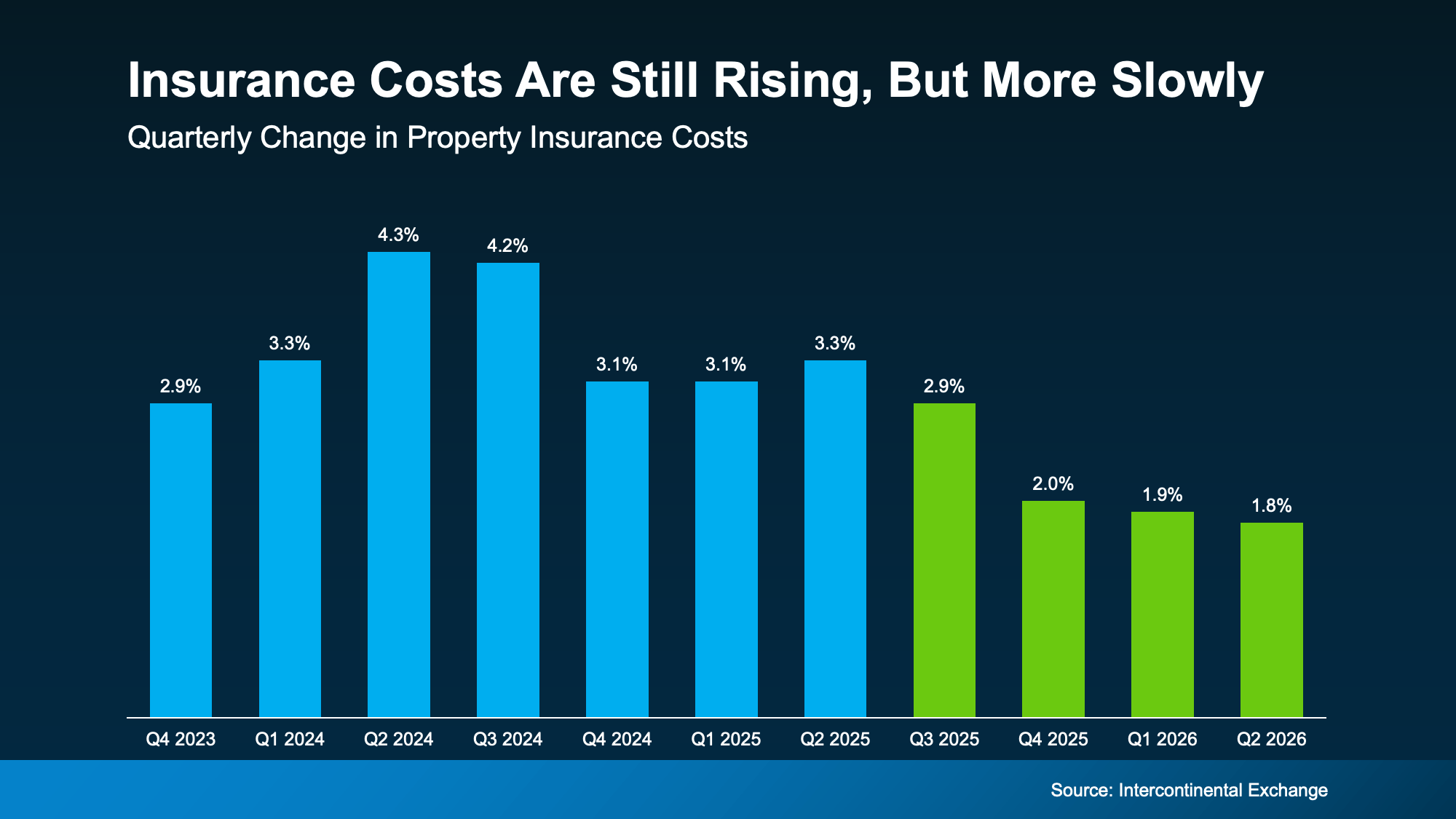
There is an important distinction here. Slower growth does not mean insurance premiums are getting cheaper. ICE reported that property insurance costs were still 8.7% higher year over year in the second quarter of 2026.
The average single-family mortgage holder was paying about $209 per month for property insurance. That represents 9.6% of the average monthly mortgage payment, according to the report.
As Andy Walden, Head of Mortgage and Housing Market Research at ICE, explained:
“Property insurance has been a fast-growing component of the monthly mortgage payment, but this quarter’s data shows the pace of increase is finally slowing.”
For homeowners, this is an encouraging change. Insurance costs are still important to budget for, but the latest numbers suggest that increases are moderating.
Shopping Around for Home Insurance Can Save Money
Here is where homeowners may have an opportunity to take action.
ICE compared homeowners who switched private insurance carriers with those who stayed with their existing providers over the previous year.
The results were notable:
- Homeowners who switched: Their insurance payments decreased by an average of 6.6%.
- Homeowners who stayed: Their insurance premiums increased by an average of 10.4%.

According to ICE, the difference worked out to approximately $440 in annual savings for homeowners who switched compared with those who stayed.
There is another encouraging detail. The homeowners who switched did not simply reduce their insurance payments by accepting less coverage. Their deductibles decreased by 1.4%, while their coverage limits increased by 7.3%, on average.
These are national averages, not guaranteed savings. Your results will depend on your property, location, coverage needs, claims history, and available insurance providers.
How to compare homeowners insurance quotes
If you are considering switching providers, compare more than just the monthly premium.
- Compare coverage limits: Make sure each quote provides appropriate protection for your home’s replacement cost and belongings.
- Review deductibles: A lower premium may come with a higher amount you must pay before coverage applies.
- Check exclusions: Understand what is and is not covered by each policy.
- Ask about discounts: Some providers offer discounts for security systems, certain home improvements, or eligible policy bundles.
- Review the insurer: Consider the company’s financial strength, customer service, and claims handling reputation.
The goal is not simply to find the cheapest policy. It is to find suitable protection at a competitive price.
The Age and Condition of Your Home Can Affect Insurance Costs
The property itself can influence how much you pay for homeowners insurance.
Research from John Burns Research and Consulting found that newly built homes constructed in 2020 or later cost approximately 10% to 15% less to insure per square foot than homes built between 1980 and 2010, on average nationally.
There are several reasons this difference may exist.
- Roof condition: Newer roofs may be less expensive to insure than aging or damaged roofs.
- Plumbing and electrical systems: Updated systems may reduce certain risks associated with older properties.
- Construction materials: Newer building materials and construction standards can influence insurance assessments.
- Safety features: Certain security and risk-reduction features may qualify for insurance discounts.
However, a newer home is not automatically cheaper to insure. The property’s location, construction, replacement cost, and exposure to specific risks still matter.
An older home may also qualify for more competitive coverage after certain improvements. Ask insurance providers whether upgrades to the roof, electrical system, plumbing, or security features could affect your quote.
What Chicago-Area Homebuyers Should Consider
If you are buying a home in Chicago or the surrounding suburbs, do not estimate insurance costs using a national average alone.
Two homes in the same area can have different insurance costs because of their age, condition, construction, replacement value, and coverage requirements.
Before making an offer or finalizing your purchase, consider these steps:
- Get a quote for the actual property: Ask an insurance provider to estimate the cost using the home’s address and property details.
- Check the roof and major systems: Ask about the age and condition of the roof, plumbing, heating, and electrical systems.
- Understand water-related coverage: Review how the policy treats sewer backup, water damage, and flooding. Standard homeowners policies do not automatically cover every type of water-related damage.
- Review replacement cost: Make sure the coverage is appropriate for rebuilding the home, not simply its market value.
- Compare coverage before closing: Insurance costs should be part of your total monthly housing budget.
Condo buyers should also review the association’s master insurance policy and understand what coverage they need individually. The association’s policy and an individual condo policy generally protect different parts of the property and ownership responsibilities.
For buyers comparing homes, the insurance quote can be another useful factor when evaluating the true cost of ownership.
Frequently Asked Questions About Homeowners Insurance
Can switching homeowners insurance companies really save money?
It can. ICE found that homeowners who switched private insurance carriers reduced their insurance payments by an average of 6.6% over the previous year. However, individual savings depend on the property, coverage, and available quotes. Always compare coverage and deductibles before switching.
How often should I compare homeowners insurance quotes?
Review your policy at least once a year, particularly before renewal. You can also compare quotes after major home improvements, changes in coverage needs, or significant premium increases. Check that a new policy is active before cancelling your existing coverage.
Are new homes cheaper to insure than older homes?
They can be. Research from John Burns Research and Consulting found that homes built in 2020 or later cost approximately 10% to 15% less to insure per square foot than homes built between 1980 and 2010, on average nationally. Actual premiums depend on the property’s location, condition, construction, and coverage.
What should I compare when choosing homeowners insurance?
Compare premiums, coverage limits, deductibles, exclusions, replacement cost coverage, and available discounts. Also consider the insurer’s reputation and claims service. The lowest premium may not provide the protection you need.
Should I get homeowners insurance quotes before buying a house?
Yes. Getting quotes before closing can help you estimate your monthly ownership costs and identify potential coverage concerns. Use the actual property address and available inspection details when requesting quotes.
Make Home Insurance Part of Your Homebuying Budget
Homeowners insurance is an important part of the total cost of owning a property. Although premiums have increased, comparing providers and understanding your coverage options may help you manage the expense.
Whether you are buying your first home, moving to another property, or reviewing your current insurance policy, take time to understand the costs before making a decision.
If you are exploring homes in Chicago or the surrounding suburbs, KM Realty Group LLC can help you evaluate properties and navigate the homebuying process.
Start by exploring homes for sale in Chicago, or contact KM Realty Group LLC when you are ready to discuss your next move.
Note: Insurance costs and coverage requirements vary by property, location, insurer, and individual circumstances. This article provides general educational information and is not insurance or financial advice. Speak with a licensed insurance professional about your coverage needs.