
What credit score do you need to buy a home?
If you have a number in mind, it may not tell the whole story. Mortgage credit requirements are changing, and the score you see in a credit monitoring app may not be the score a mortgage lender uses.
New credit scoring models are also becoming available for certain mortgage programs. These changes may give some buyers more ways to have their credit evaluated. However, they do not guarantee mortgage approval or eliminate other lending requirements.
Here are three important things homebuyers should understand about credit scores before applying for a mortgage.
1. Many Homebuyers Overestimate the Credit Score They Need
One common reason people delay buying a home is the belief that their credit score is too low.
But there is no single minimum credit score that applies to every mortgage. Requirements vary by loan program, lender, underwriting method, and the borrower’s overall financial situation.
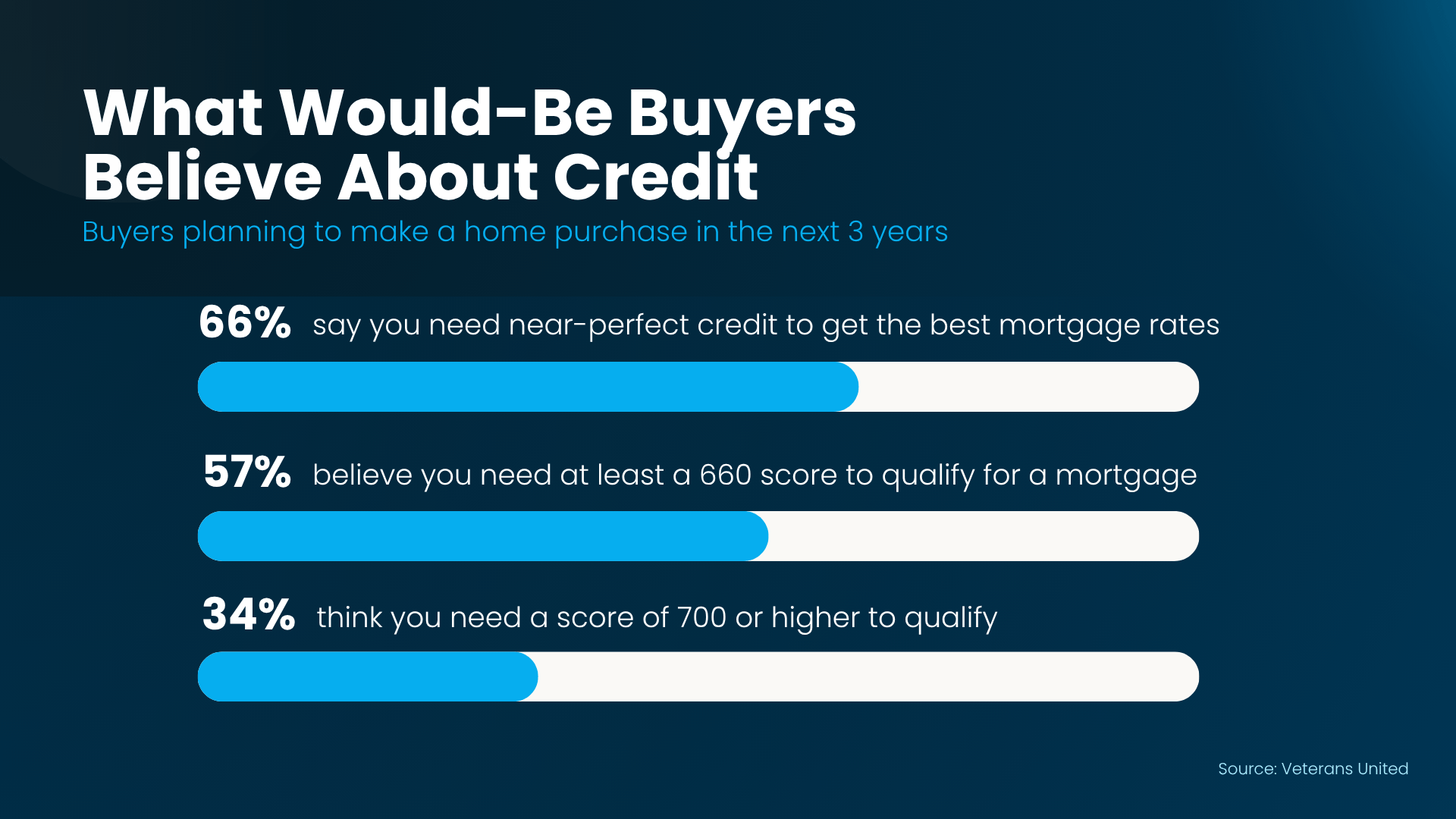
A May 2026 survey from Veterans United Home Loans found that many prospective buyers overestimate the credit score needed to qualify for a mortgage.
- 57% of respondents believed a credit score of at least 660 was needed to qualify.
- 34% believed a score of 700 or higher was required.
- 66% believed near-perfect credit was necessary to secure the best mortgage rates.
The survey included 400 veterans and civilians who planned to buy a home within the next three years. It was conducted online from March 13 to March 24, 2026.
In reality, some mortgage programs allow borrowers to qualify with lower credit scores. For example, FHA guidelines generally allow a minimum score of 580 for maximum financing, subject to other requirements. Scores between 500 and 579 may qualify with a larger down payment under FHA rules. Individual lenders may apply additional requirements.
There is also an important distinction with conventional financing. Fannie Mae’s automated underwriting system, Desktop Underwriter, does not require a minimum third-party credit score for eligible loan casefiles. Manually underwritten loans and other loan situations have different requirements.
The takeaway: Do not assume you cannot qualify based on a credit score you have heard about or seen online. Ask a qualified mortgage professional to review your situation and explain which loan options may be available.
2. Mortgage Credit Scoring Models Are Changing
For decades, the mortgage industry relied heavily on traditional FICO credit scores. That is beginning to change as newer scoring models become available.
The Federal Housing Finance Agency (FHFA) has approved additional credit scoring models for eligible mortgage loans backed by Fannie Mae and Freddie Mac.
What are the newer credit scoring models?
VantageScore 4.0: This model can consider information such as payment history and trended credit data. It may also help evaluate some consumers who have limited traditional credit histories.
FICO Score 10T: This newer FICO model uses trended credit data to examine how consumers manage credit over time, rather than relying only on a snapshot of their credit balances and payment history.
What has changed in 2026?
There are several important implementation updates homebuyers should understand.
- September 9, 2026: VantageScore 4.0 became available to all Fannie Mae and Freddie Mac approved lenders for eligible loans. Lenders can choose between VantageScore 4.0 and Classic FICO under the applicable requirements.
- FICO Score 10T: Although approved by FHFA, it is not yet available for loans delivered to Fannie Mae and Freddie Mac. Further implementation guidance is expected.
- January 1, 2027: FHA is scheduled to accept VantageScore 4.0 and FICO Score 10T alongside Classic FICO for eligible FHA-insured mortgage underwriting. The change applies to FHA case numbers assigned on or after this date.
These changes do not mean every lender uses every scoring model today. Availability depends on the loan program, lender participation, and applicable underwriting rules.
You may also notice that your credit score differs between a banking app, a credit monitoring service, and a mortgage application. That is because different scoring models and credit data may produce different results.
The takeaway: Ask your loan officer which credit scoring model applies to your mortgage application. A score from a consumer app may not be the same score used for mortgage underwriting.
3. Build Healthy Credit Habits Before Buying a Home
New scoring models may change how lenders evaluate credit, but responsible credit habits remain important.
Whether you plan to buy a home soon or are preparing for a purchase next year, these steps can help you build and maintain a stronger credit profile.

Pay your bills on time
Payment history is an important factor in many credit scoring models. Make payments by their due dates and consider setting up reminders or automatic payments.
Keep credit card balances manageable
Using a large portion of your available credit may affect your credit profile. Try to keep balances low relative to your credit limits.
Avoid unnecessary credit applications
Opening several new credit accounts in a short period can affect your credit profile. Before applying for new credit while preparing for a mortgage, talk with your loan officer.
Review your credit reports
Check your credit reports for inaccurate information, unfamiliar accounts, and outdated records. Correcting errors may help ensure your credit history is reported accurately.
Think carefully before closing accounts
Closing a credit card may affect your available credit and credit utilization. Consider the possible impact before closing an account.
One more important tip: Avoid major financial changes during the mortgage process without first speaking with your loan officer. New loans, large purchases, and changes in debt can affect your mortgage application.
The takeaway: Consistent financial habits can help you prepare for a mortgage application, regardless of which approved credit scoring model is used.
Frequently Asked Questions About Credit Scores and Mortgages
What credit score do I need to buy a house?
There is no single credit score requirement for every mortgage. Requirements depend on the loan program, lender, and underwriting method. Some FHA loans may allow scores as low as 500 with a larger down payment, while other programs have different requirements. A mortgage professional can help identify the options that fit your financial situation.
Can I buy a home with a credit score below 620?
Possibly. Some mortgage programs may allow borrowers with scores below 620 to qualify, depending on the loan guidelines and lender requirements. Your income, debt, savings, payment history, and other factors may also affect eligibility.
Why is my mortgage credit score different from the score in my banking app?
Credit scoring models use different methods to evaluate credit information. Your banking app may show a VantageScore or another consumer score, while a mortgage lender may use an approved mortgage credit scoring model. The scores can therefore differ.
Can paying rent help improve my credit score?
Rent payments may help build your credit history when they are reported to the credit bureaus and considered by the scoring model. VantageScore 4.0 can consider eligible rental payment information. However, not every landlord reports rent payments, and not every mortgage underwriting process treats rental history in the same way.
Should I wait for the new credit scoring models before applying for a mortgage?
Not necessarily. VantageScore 4.0 is already available to approved Fannie Mae and Freddie Mac lenders for eligible loans. FHA’s additional models are scheduled for January 1, 2027. Ask a loan officer which models and loan options are currently available to you rather than delaying your plans based only on a future implementation date.
Understand Your Credit Before You Start House Hunting
Mortgage credit scoring is evolving, but a new scoring model does not automatically mean mortgage approval. Your credit history, income, debt, savings, loan program, and lender requirements all matter.
The best first step is to understand where you stand. A qualified mortgage professional can review your financial situation, explain the available loan programs, and help you identify areas that may need attention before you apply.
If you are planning to buy a home in Chicago or the surrounding suburbs, KM Realty Group LLC can help you understand the homebuying process and connect your home search with the right next steps.
Explore homes for sale in Chicago when you are ready to see what is available, or contact KM Realty Group LLC to speak with our real estate team.
Note: Credit score guidelines and mortgage eligibility requirements can change. This article is for general educational purposes and is not financial, credit, or mortgage lending advice. Consult a qualified mortgage professional about your individual circumstances.