
When saving for real estate, securing a first-time homebuyers down payment often feels like the most intimidating hurdle.
Many prospective buyers delay entering the market simply because they believe a 20% cash down payment is mandatory.
In today’s lending environment, that belief is an outdated myth. Real estate data proves that most buyers secure a mortgage with far less money out of pocket.
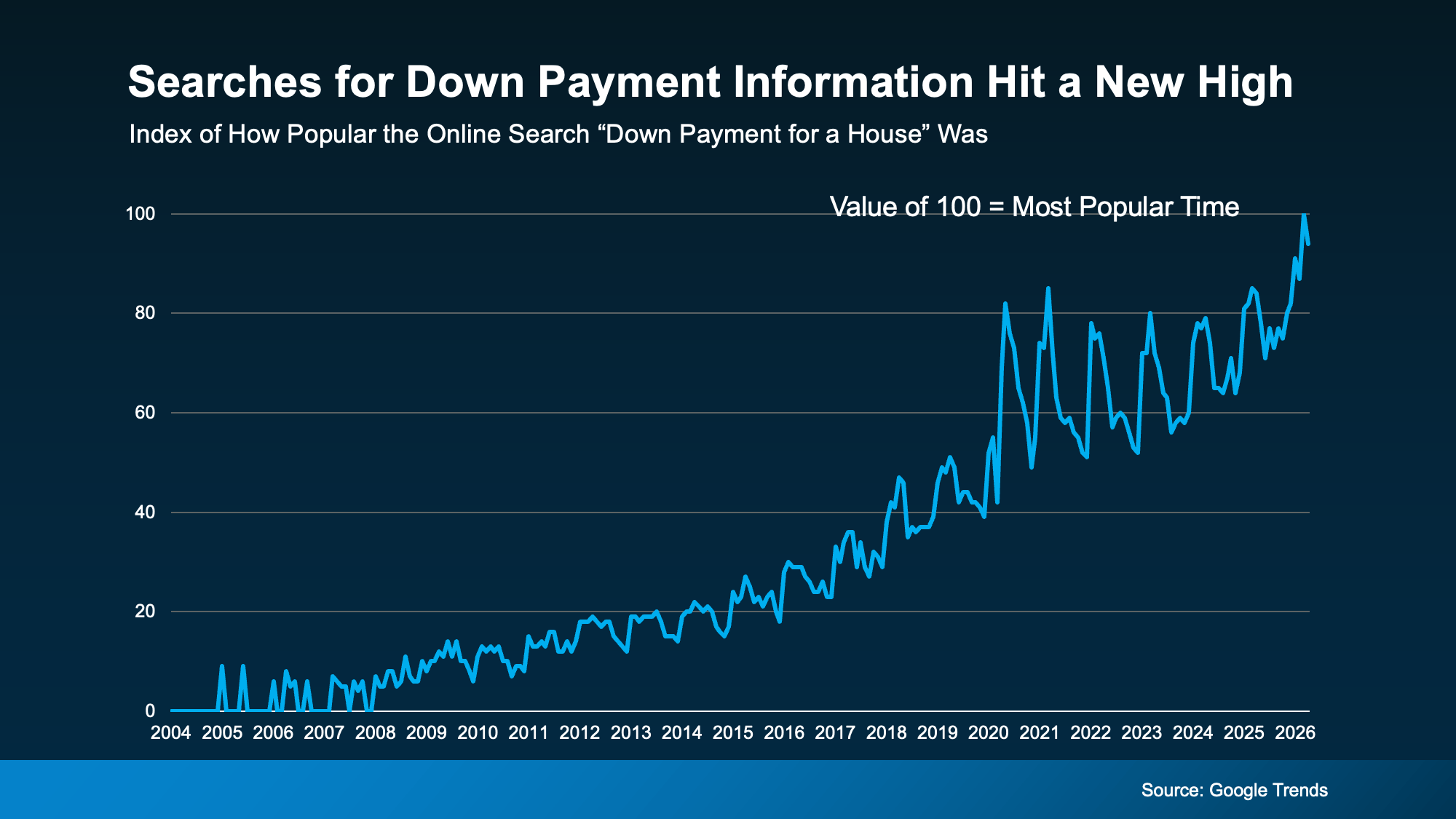
According to Google Trends, nationwide searches for down payment assistance and loan requirements have reached record levels. Buyers are actively looking for clear, factual numbers rather than outdated advice.
The 20% First-Time Homebuyers Down Payment Myth
You do not need a 20% down payment to purchase a home. According to the National Association of Realtors, the median first-time homebuyers down payment is only 10%. Qualified buyers frequently purchase homes with as little as 3% to 3.5% down using conventional and FHA loan options.
While putting 20% down eliminates private mortgage insurance (PMI), waiting years to save that amount can cost you more in rising property prices than you would pay in insurance.
Modern loan programs provide accessible entry paths with minimal upfront cash:
- FHA Loans: Insured by the federal government, FHA loans allow down payments as low as 3.5% for borrowers with qualifying credit.
- Conventional Low-Down Programs: Many conventional options permit down payments as low as 3% for first-time purchasers.
- VA & USDA Loans: Qualified veterans and active military personnel can utilize VA loans requiring zero down payment.
What First-Time Homebuyers Actually Put Down
National lending figures show a stark contrast between common assumptions and reality.
According to data from the National Association of Realtors (NAR), the median down payment for first-time buyers sits near 10%—half of the traditional assumption.

Setting an artificial 20% savings requirement extends your timeline unnecessarily while delaying the equity benefits of homeownership.
For a detailed breakdown of planning your initial purchase, review our core first-time homebuyer tips.
Average First-Time Homebuyers Down Payment Amounts Are Decreasing
Recent market analyses indicate that buyers are entering the market with smaller upfront out-of-pocket balances.
Research published by Realtor.com shows the typical buyer’s cash outlay decreased roughly 19% year-over-year.
Because the average first-time homebuyers down payment has moderated, entering the housing market requires less upfront capital today than in previous volatile years.
Three primary market dynamics drive this shift:
- Balanced Inventory: More stabilized listing inventory reduces the pressure to place aggressive cash-heavy offers.
- Loan Diversification: Greater utilization of government-backed lending programs that favor lower initial capital.
- Price Moderation: Calmer appreciation rates give prospective owners time to budget responsibly.
Assistance Programs for Your First-Time Homebuyers Down Payment
Beyond traditional low-down mortgages, thousands of regional and state grants exist to reduce your initial out-of-pocket costs.
Research from Down Payment Resource shows more than 2,600 down payment assistance (DPA) programs active across the country, providing an average financial benefit near $18,000.
These assistance funds often take the form of competitive grants, forgivable second loans, or targeted tax credits. Utilizing these grants directly offsets your first-time homebuyers down payment and associated settlement charges.
Working with experienced, vetted local mortgage lenders ensures you identify every program for which you qualify.
Family Gift Funds and Flexible Financing Options
Many buyers also bridge upfront savings through family gift contributions.
Most loan guidelines allow immediate relatives to gift funds toward your purchase price or closing expenses, provided the gift is properly documented with your mortgage lender.
When combined with accessible home choices—such as starter properties featured in our list of homes under $200K in Chicago—covering a first-time homebuyers down payment becomes practical much earlier than anticipated.
Key Takeaways on Down Payments
- 20% Is Not Required: You can purchase a home with as little as 3% to 3.5% down through conventional and FHA loans.
- 10% Median Baseline: The average first-time purchaser puts down half of what common myths suggest.
- DPA Programs Exist: Thousands of local programs offer grants and credits to help cover upfront expenses.
- Local Guidance Matters: Loan programs and grant rules vary significantly by city and county guidelines.
Frequently Asked Questions on Down Payments
Can I buy a house with zero down payment?
Yes. Borrowers who qualify for VA loans (for military service members and veterans) or USDA loans (for eligible suburban and rural properties) can finance up to 100% of the purchase price with zero down payment.
How does a smaller first-time homebuyers down payment affect monthly payments?
A smaller down payment slightly increases your monthly loan balance and will typically require private mortgage insurance (PMI). However, PMI is temporary and can be removed once your property reaches 20% equity through market appreciation and regular payments.
Plan Your Home Purchase with Experienced Guidance
Understanding actual loan guidelines helps you evaluate what is realistic for your budget today instead of delaying your goals for years.
For more localized insights on purchasing across Cook County and the surrounding suburbs, explore our guide on first-time homebuyer affordability options.
When you are ready to review your buying power and tour available properties, connect with our client advisory team or call our Chicago office at (312) 283-0794 to get started.