
If you’re wondering whether to buy a home right now or wait until next year, you’re not alone. With constant headlines about mortgage rates and the economy, many buyers are asking whether it makes sense to move forward today.
While housing market conditions have shifted, buying a home is still very achievable—it simply requires a clear budget, local market insight, and the right financing strategy.
Understanding what’s actually happening with rates, inventory, and negotiating power can help you make a confident decision based on your life—not the headlines.
Mortgage Rates Are Volatile—Here’s What Experts Expect
After bouncing between the low-6% and upper-6% range throughout 2026, mortgage rates remain sensitive to inflation reports, Treasury yields, and broader economic shifts. As Mark Fleming, Chief Economist at First American, explains:
“Mortgage rates have recently moved higher, driven by geopolitical uncertainty and rising energy costs that are contributing to inflation concerns.”
Should you put your plans on hold waiting for a dramatic drop in rates? According to our 2027 housing market forecast, major forecasters like Fannie Mae and the Mortgage Bankers Association expect 30-year fixed rates to stay near the upper-6% to 7% range in 2027—meaning waiting solely for 3% or 4% rates could leave you on the sidelines while home prices keep inching up.
Your Window to Buy Hasn’t Closed
Zooming out puts today’s market into perspective. Even when rates fluctuate, monthly affordability has improved compared to peak rate spikes—saving buyers hundreds of dollars a month on a typical $500,000 mortgage compared to earlier highs (see chart below):
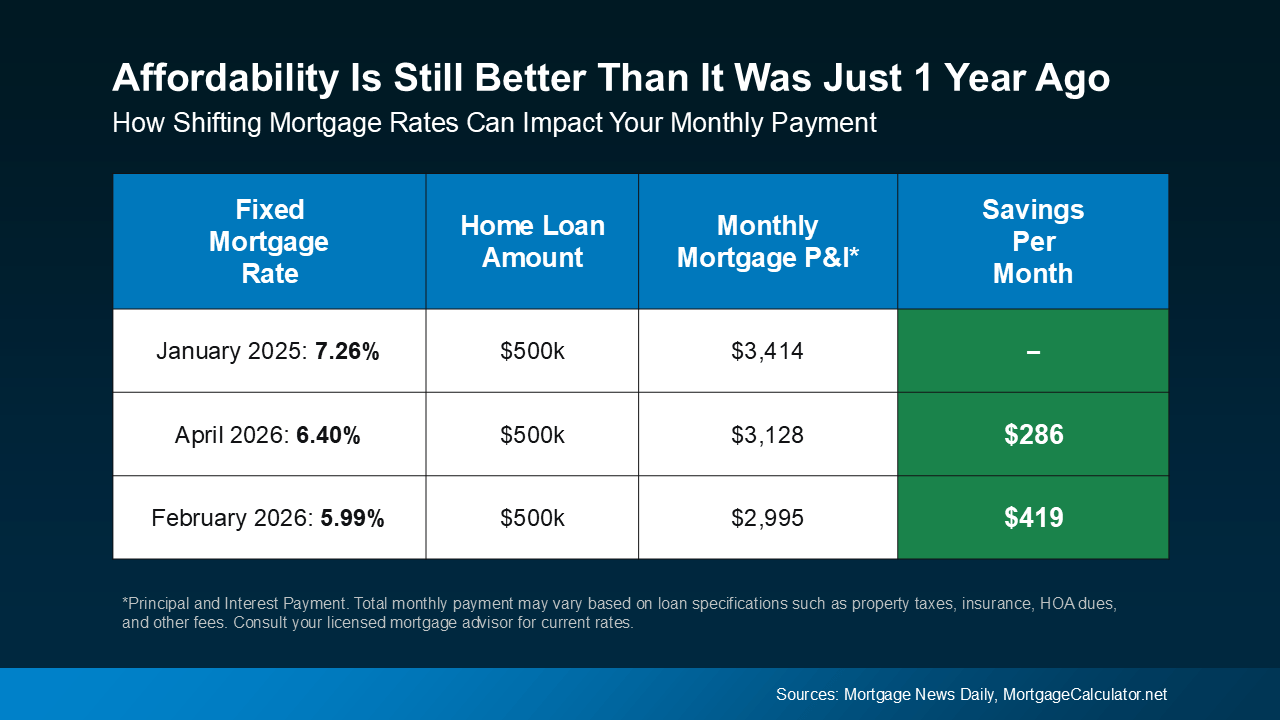
More importantly, today’s slower seasonal pace gives buyers something they didn’t have during peak spring and summer rushes: breathing room and negotiating leverage. While summer months bring roughly 32% more listings, fall and winter buyers often face less competition and more motivated sellers.
Instead of trying to time the exact bottom of the interest rate market, focus on how low rates vs. buyer leverage work together—because you can refinance a mortgage rate later, while you can never renegotiate the purchase price you paid.
When It Comes to Rates, Focus on What You Control
You can’t control Federal Reserve announcements or where mortgage rates move next week. You can control how you prepare to get the best mortgage rate—including strengthening your credit score, comparing multiple lenders, and structuring your offer with smart concessions.
Smart Ways to Buy a Home in Today’s Market
If your family is growing, your lease is ending, or you are relocating for work, you don’t have to wait for “perfect” headlines to buy. Across Chicago and the surrounding suburbs, successful buyers are using practical strategies to make the numbers work:
- Expand your property search: Compare single-family homes, current condo listings in Chicago, and smaller homes that keep monthly costs manageable—or explore buying a fixer-upper to build instant equity.
- Explore flexible financing: Ask your lender about seller-paid mortgage rate buydowns, adjustable-rate mortgages (ARMs) for lower upfront payments, or Cook County down payment assistance.
- Get pre-approved before touring: Follow our first-time home buyers checklist so you know your exact monthly budget and can negotiate confidently when the right home hits the market.
Frequently Asked Questions About Buying a Home Right Now
Is it better to buy a house now or wait for lower mortgage rates?
If your finances are stable and you plan to stay in the home for at least 3 to 5 years, buying now allows you to negotiate seller concessions and start building equity—with the option to refinance if rates dip later. Waiting risks paying higher home prices and facing stronger buyer competition.
Do buyers have more negotiating power in late 2026?
Yes. Compared to the bidding wars of a few years ago, today’s balanced market gives buyers more time to inspect properties and negotiate seller credits toward closing costs, repairs, or temporary interest rate buydowns.
How much money do I need saved before buying a home?
You do not need 20% down. Many conventional and FHA loans require just 3% to 3.5% down, VA loans offer 0% down for eligible veterans, and local down payment assistance programs can help cover upfront closing costs.
Talk to a Local Real Estate Expert Before You Decide
Deciding whether to move forward with buying a home isn’t about timing the market perfectly—it’s about running real numbers for your target neighborhood and lifestyle.
Buying in Chicago or the surrounding suburbs? Connect with Tammy Jackson and the team at KM Realty Group LLC—bringing over 20 years of Chicagoland real estate experience—or call (312) 283-0794 to review your buying options today.
